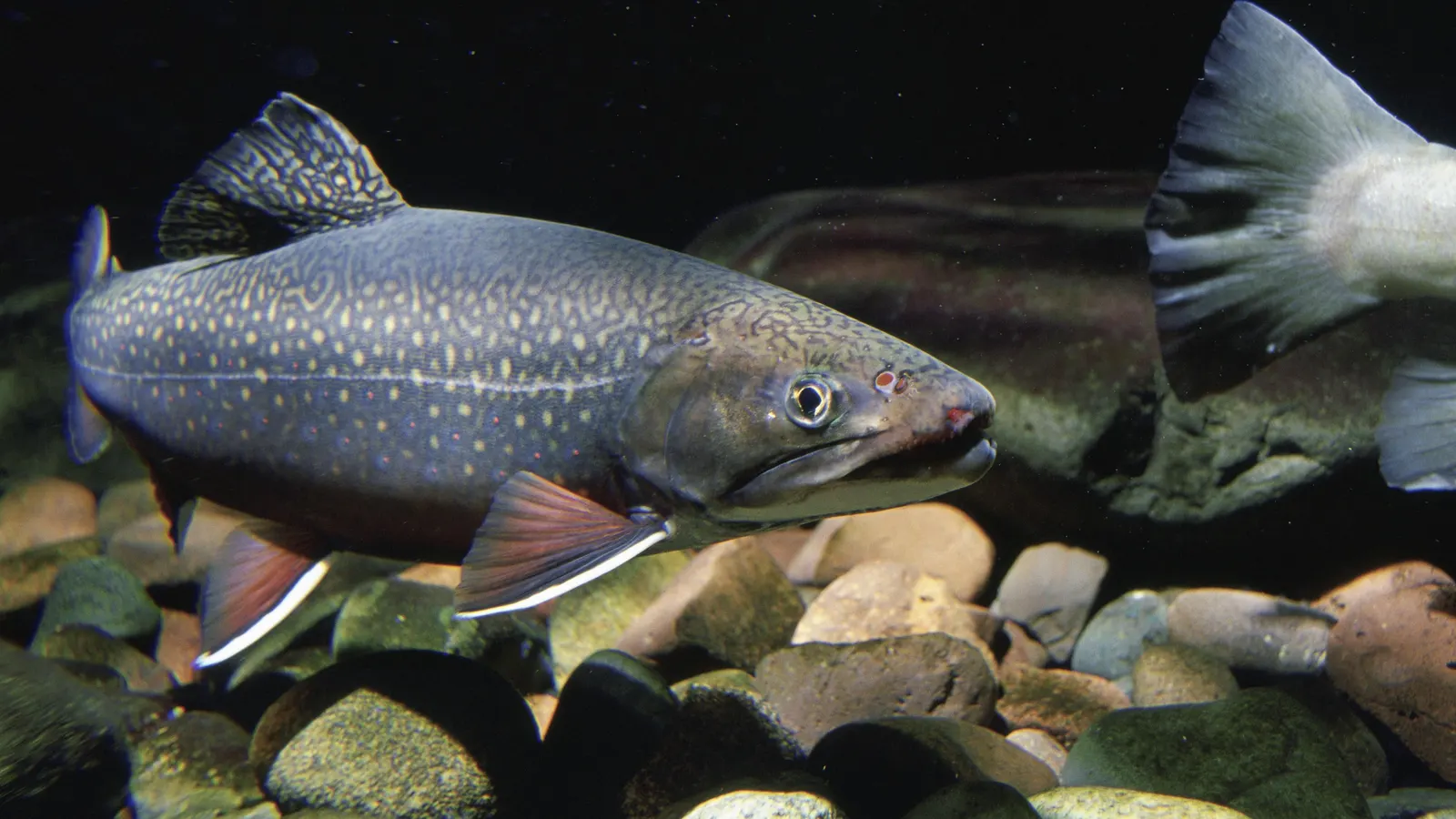

Ask a fisheries biologist where wild brook trout still hold on in the lower 48 and the answer is Maine, and it is not close. The rest of the Northeast largely rebuilt its trout fishing on hatchery trucks. Maine still has whole townships of water where no truck has ever backed up: beaver flowages, mountain ponds, and rivers where every squaretail hatched in the gravel it is finning over. The state treats this as the resource it is. IF&W publishes official map layers for Heritage Fish Waters and Wild Brook Trout Priority Conservation Areas, and it prints a stocking report so you always know which fish came from where.
That is the honest split you should hold in your head for trout fishing in Maine: wild fish in the north and west, stocked fish filling the gaps in the south. Both are worth your time. They just deserve different expectations, and in some cases different law.
Where the wild ones live
If you are asking where the best trout fishing in Maine is, the answer splits by how far you are willing to drive from pavement.
Rangeley country
The Rangeley Lakes region of western Maine is the historic heart of American brook trout fishing, and it still earns the title. The Rapid River is the headline: about 3.5 miles of heavy pocket water dropping more than 100 feet from Lower Richardson Lake to Umbagog, with wild brook trout that average several pounds. IF&W manages it as fly-fishing-only water with catch-and-release on brook trout, and there is no road to it. You walk in, cross Lower Richardson by boat, or stay at Lakewood Camps. Verify the current rules in FLOAT before you go, but that character has not changed in decades.
Kennebago Lake, north of Rangeley behind a private gated road, is the largest fly-fishing-only lake in Maine, about five miles long and 119 feet deep, with native brook trout feeding on smelt. Aziscohos Lake has not seen a hatchery brook trout since 1973 and is managed as one of the few truly wild brook trout and salmon lakes left; the launch is off Route 16 near Wilsons Mills. The Richardson Lakes run more mixed: the 2026 stocking report lists brook trout going in at Richardsontown Township and Township C, and the South Arm launch out of Andover is the usual way on. A full Rangeley Lake spot page is in the works here.
Moosehead and the big woods
IF&W lists wild brook trout among the principal fisheries on Moosehead Lake, Maine’s largest, with trailered launches at Greenville off Lily Bay Road and at Rockwood off Route 6. On water that big, brookies are a shoreline and tributary-mouth game: fish the first month after ice-out and again in September, not the dog days. Brassua Lake sits about five miles west on the Moose River, is known for its brook trout, and has a launch right off Route 15 near Rockwood with a short walk to the fly water below Brassua Dam.
Baxter country and the small ponds
Nesowadnehunk Lake, reached by gravel logging road west of Baxter State Park, is the classic Katahdin-country trout lake, and it is special-regulation water, so read the rules first. Below Ripogenus Dam, the West Branch of the Penobscot runs cold for about 11 miles down to Abol Bridge, and native brook trout share it with wild landlocked salmon; much of that water fishes best from a raft or drift boat because of the falls and deep pools.
The quiet answer, though, is the small stuff. Maine’s real brook trout abundance lives in ponds most people drive past. IF&W’s open-data hub publishes the Heritage Fish Waters and Wild Brook Trout Priority Conservation Areas layers, and cross-referencing those against a gazetteer is how locals build their short list. Our Maine fishing map is the fast way to start.
The stocked side, honestly
None of this means stocked fish are beneath you. The 2026 stocking report lists brook trout going into the Mousam River at Sanford and Shapleigh, the Presumpscot River at Windham, the Saco River at Standish, the St. George River at Appleton, Union, and Searsmont, and the Androscoggin, which the report lists receiving brook, brown, and rainbow trout at towns from Bethel and Gilead downstream to Lisbon. China Lake took brook trout at China and Vassalboro. These are put-and-take fisheries an easy drive from Portland, Lewiston, and the midcoast, and in April they are exactly where a kid should catch a first trout.
The difference is you should know which fish you are catching, and Maine makes that easy: the stocking report is public and updated through the year. A wild 10-incher from a beaver pond and a fresh hatchery 10-incher from the Mousam are different animals. Keep the stocked one for the pan without guilt. Think harder about the wild one.
When to fish: the season at a glance
Maine splits inland water into a North Zone and a South Zone with different general-law seasons. The 2026 law book has the zone map; these are the general-law dates.
| Dates | What general law says | | --- | --- | | April 1 | North Zone lakes and ponds open; every river, stream, and brook opens statewide | | April 1 to August 15 | Flowing water open to all legal methods | | August 16 to September 30 | Rivers, streams, and brooks: artificial lures or flies only, statewide | | October 1 to March 31 | North Zone lakes and ponds closed; all flowing water closed, both zones | | Year-round | South Zone lakes and ponds open under general law, ice and open water |
North Zone ice fishing for trout happens only on waters a special regulation opens; there is no general-law ice season up there.
How to fish them, season by season
Ice-out through May. The best three weeks of the year. Trout are shallow, on shorelines, and stacked at tributary mouths eating whatever the current brings. Cast a size 0 or 1 inline spinner along the banks, drift a worm under a small float where bait is legal, or troll a small streamer 20 to 30 feet behind a canoe at walking speed. On Moosehead-scale water, work the mouths of the feeder brooks.
June. Still honest fishing, especially mornings and evenings on ponds. Pocket water on the rivers fishes well before the flows drop. This is the month a 6 foot ultralight and a box of spinners covers everything.
July and August. Brook trout need cold water, so go find it. On lakes they slide down to the cold layer and off the shorelines. Your options: fish dawn, fish springs and deep holes, or climb, because the high small streams stay cold when the valley rivers go warm. From August 16 the flowing water goes to artificials only under general law, so leave the worms home for river trips.
September. The month the north country was made for. Fish color up and get aggressive ahead of the fall spawn, and the big lake fish push back toward the shallows and river mouths. North Zone lakes and ponds, and all flowing water, close after September 30, so it ends exactly when it gets good. Go anyway.
Limits, and the special-regs trap
General-law numbers for 2026, straight from IF&W:
| Where | Daily limit | Minimum length | | --- | --- | --- | | North Zone lakes and ponds | 5 fish | 6 inches | | South Zone lakes and ponds | 2 fish | 6 inches | | Rivers, streams, brooks (both zones) | 5 fish | 6 inches |
The limit is an aggregate: splake and Arctic charr count toward your brook trout total.
Now the trap. Hundreds of individual Maine waters carry special regulations, the S-codes, and where a water is listed, the special law overrides everything in that table. S-19 cuts the brook trout limit to 2. S-7 means every trout, salmon, and togue goes back alive. ALO and FFO codes restrict you to artificial lures or flies. Most of the wild waters named on this page carry at least one. Look your water up in IF&W’s FLOAT tool before you fish; it is map-based, works on a phone, and takes two minutes. Our seasons and regulations guide walks through how to read it, and you will want your license sorted first.
The rig that covers it
You do not need much. One ultralight covers a Rangeley pond in May, a Baxter-road brook in July, and the Mousam in April.
That is the whole kit. Spend the money you saved on gas for the logging roads, because in Maine the brook trout fishing gets better the farther the pavement is behind you.
Common questions
What is the brook trout limit in Maine?
Under 2026 general law it is 5 fish on North Zone lakes and ponds, 2 fish on South Zone lakes and ponds, and 5 fish on rivers, streams, and brooks in both zones, all with a 6 inch minimum. Splake and Arctic charr count toward the same total. Hundreds of individual waters carry special rules that override these numbers, so check your water in the IF&W FLOAT tool first.
When does trout season open in Maine?
April 1 is the general-law opener for North Zone lakes and ponds and for every river, stream, and brook statewide. South Zone lakes and ponds are open year-round under general law, ice and open water. Flowing water goes to artificial lures or flies only from August 16 through September 30, then closes October 1.
Where is the best wild brook trout fishing in Maine?
The Rangeley region is the historic heart of it: the Rapid River, Kennebago Lake, and Aziscohos Lake all hold wild fish, and the Rapid is rated among the best wild brook trout water in the country. Moosehead Lake and the small ponds around Baxter State Park, like Nesowadnehunk Lake, are the other pillars. Most of these waters carry special regulations, so read the rules for the exact water before you go.
Can I fish worms for brook trout in Maine?
On general-law water, yes, and a worm under a small float is still the classic pond approach. But many of the best wild trout waters are restricted to artificial lures only or fly fishing only, and flowing water statewide is artificials-only from August 16 to September 30. Check your water in the FLOAT tool before you pack bait.
Are Maine brook trout wild or stocked?
Both, and the state tells you which. The waters up north and west are largely wild and self-sustaining, while southern rivers like the Mousam, Presumpscot, and Saco get hatchery brook trout every spring. The IF&W stocking report is public and updated through the year, so you can look up exactly what went where.