
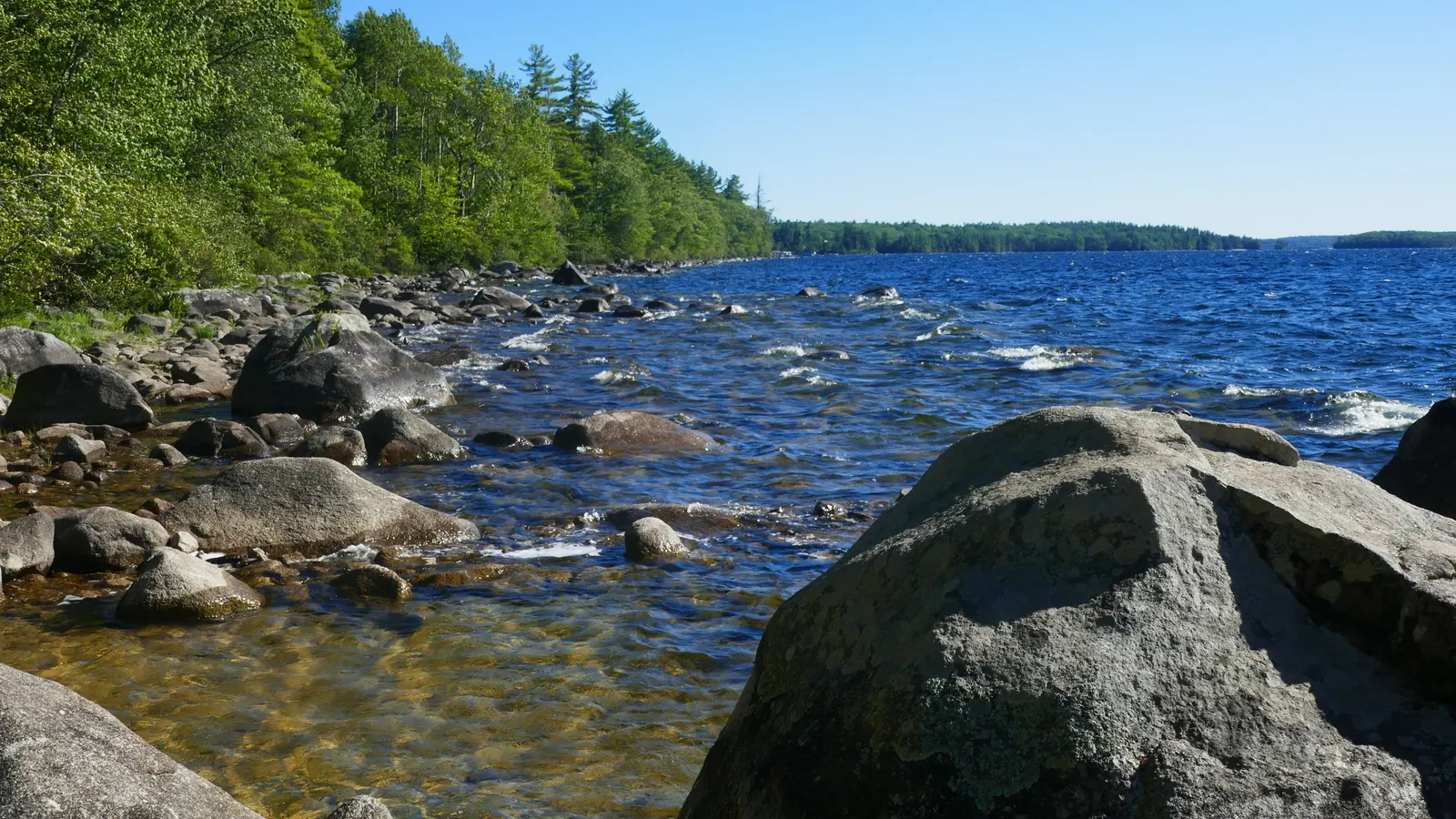

Moosehead is Maine’s biggest lake. Sebago is far deeper: 316 feet down at the bottom of the big basin, 70 feet deeper than Moosehead with well under half the acreage. All that cold water sits in Cumberland County, ringed by seven towns, one of which (Frye Island) is an island out in the middle of the lake.
The depth is why this page exists. Sebago is one of the few Maine waters where landlocked salmon are actually native, one of the state’s original native strains, and the fish that carries the lake’s name. Old-timers still call landlocks Sebago salmon. This is not a put-and-take fishery wearing a famous label, either: IF&W reports roughly 70 percent of the salmon caught here now are wild fish, and 100 percent of the lake trout are. Rainbow smelt feed all of it, and the state manages salmon and togue as competing smelt predators kept in balance, aiming the fishery at 3 to 4 pound salmon with some 5 to 8 pound fish in the mix.
Species and seasons
| Species | Wild or stocked | Best window | Where to look | | --- | --- | --- | --- | | Landlocked salmon | Roughly 70% wild, backed by stocking | Ice-out through May, again in September | Top 20 feet in spring, deep over open water by July | | Lake trout (togue) | 100% wild | Shallow at ice-out, deep all summer | 40 to 80 feet near bottom once the lake stratifies | | Smallmouth bass | Wild | June at dawn, then all season | Rocky shoals and drop-offs | | Largemouth bass | Wild | June through September | Warm coves and weedlines |
One more resident worth knowing about: northern pike. They were illegally introduced, they are established, and IF&W flags them as a direct threat to the salmon fishery because they sit at the same smelt trough as everything else in the lake.
Getting on the water
Sebago has real public access, which is not a given on a lake this developed.
- MDIFW launch off Route 302. The state’s improved trailered ramp on the lake, and the default choice for most boats.
- Sebago Lake State Park launch. An improved ramp inside the park at the north end of the lake; a use fee applies.
- Route 35 launch, Standish. Improved ramp on the Standish shore, also with a use fee.
- Private marinas. Several operate around the lake and fill the gaps when the public ramps are jammed on a July Saturday.
Rules before you rig
Under Maine’s general law, landlocked salmon carry a 2 fish daily limit with a 14 inch minimum, and togue a 2 fish limit with an 18 inch minimum. Do not stop there. Premier salmon waters like Sebago commonly carry water-specific rules that override the general law, so look the lake up in IF&W’s online angling tool (FLOAT) before you fish. Our Maine fishing seasons and regulations guide explains how the zones and special codes work, and the Maine fishing license guide has 2026 fees and where to buy.
Local tactics by season
Ice-out through May: fish the top of the water
Smelt push shallow in early spring and the salmon follow them right to the surface. The classic Sebago move is a tandem streamer, Grey Ghost first among them, flat-lined 20 to 30 feet behind the boat on 6 pound mono and pulled fast enough that it darts like a panicked baitfish. A silver Rapala Original Floater does the same work on a spinning rod. Stay in the top 20 feet and keep the boat moving: down the shorelines that warm first, across points, and past river mouths where the smelt run. The Songo River mouth by the state park is a classic stop. Togue are shallow now too, and an ice-out troller catches both without changing anything.
June: the lake splits in two
As the surface warms, the salmon slide down and the surface bite fades. Clip on lead core and run a Mooselook Wobbler 2 to 4 colors down to stay on them. The consolation prize is better than the word suggests: smallmouth move onto the rocky shoals to spawn and feed, and dawn topwater in June is the most fun this lake offers. Throw a floating minnow over the rocks early, then drag crayfish imitations along the drop-offs once the sun gets up.
July and August: think deep
High summer is togue season. Work 40 to 80 feet near bottom with large spoons on 6 to 10 colors of lead core or a downrigger ball, or park over a hump and vertical-jig white tubes on 20 to 30 pound braid. Maine law restricts small lead sinkers and bare lead jigs to protect loons (see IF&W’s lead tackle rules), so rig tin or tungsten to be safe. The salmon are down there too, usually higher in the water column over the same deep basins, so a second rod a few colors up covers them on the same pass. If the coldwater fish lock up on a flat, hot afternoon, the largemouth in the warm coves and along the weedlines will still play.
September: the second spring
Cooling water flips the switch back on. Salmon feed hard and stage off the river mouths ahead of the fall spawn, and this is the month to put down the trolling rods and cast: streamers and small spoons around the mouths, early and late. One caution if you chase them toward moving water: under general law, Maine’s rivers and streams drop to artificial lures or flies only from August 16 through September 30 and close October 1, and water-specific rules commonly apply near Sebago’s inlets. Check the angling tool before you cast at a river mouth.
If Sebago is your kind of lake
The same salmon-and-togue game runs on Moosehead, on 74,890 acres with a far wilder shoreline and the state’s other great smelt-driven fishery. Read our Moosehead Lake guide if you want the North Woods version, and check the seasons and regulations guide before any trip. The rules change more often than the fish do.
Common questions
Do I need a fishing license for Sebago Lake?
Yes. Anyone 16 or older needs a Maine fishing license. A resident season license is $30 and a nonresident season license is $83, with short-term options down to an $18 one-day license. Kids under 16 fish free, and the 2026 free fishing days are February 14-15 and May 30-31.
Are the salmon in Sebago Lake stocked or wild?
Mostly wild. IF&W reports that roughly 70 percent of the salmon fishery is wild fish, with stocking filling in the rest. The lake trout population is 100 percent wild.
When is the best time to fish Sebago Lake?
Ice-out through May is the classic window, when salmon chase smelt near the surface and a flat-lined streamer takes fish. By midsummer the salmon and togue go deep, and trolling shifts to lead core and downriggers. Smallmouth are best in June when they sit shallow.
Where can I launch a boat on Sebago Lake?
There is an improved MDIFW ramp off Route 302, a launch inside Sebago Lake State Park, and a Route 35 launch in Standish. The state park and Route 35 ramps charge a use fee. Private marinas around the lake round out the options.
Are there northern pike in Sebago Lake?
Yes, and they were never supposed to be there. Pike were illegally introduced, and IF&W flags them as a threat to the salmon fishery because they eat the same rainbow smelt the salmon and togue depend on.